The biomass energy sector in the Republic of Moldova can be developed through fiscal incentives and legislative interventions, according to a study developed with the support of UNDP Moldova, financed by the EU. The study recommends introducing short-rotation plantations into forestry legislation to create a simplified regulatory framework for managing this type of forest, including species such as poplar, willow, and acacia, which can be used for generating thermal energy at thermal power plants.
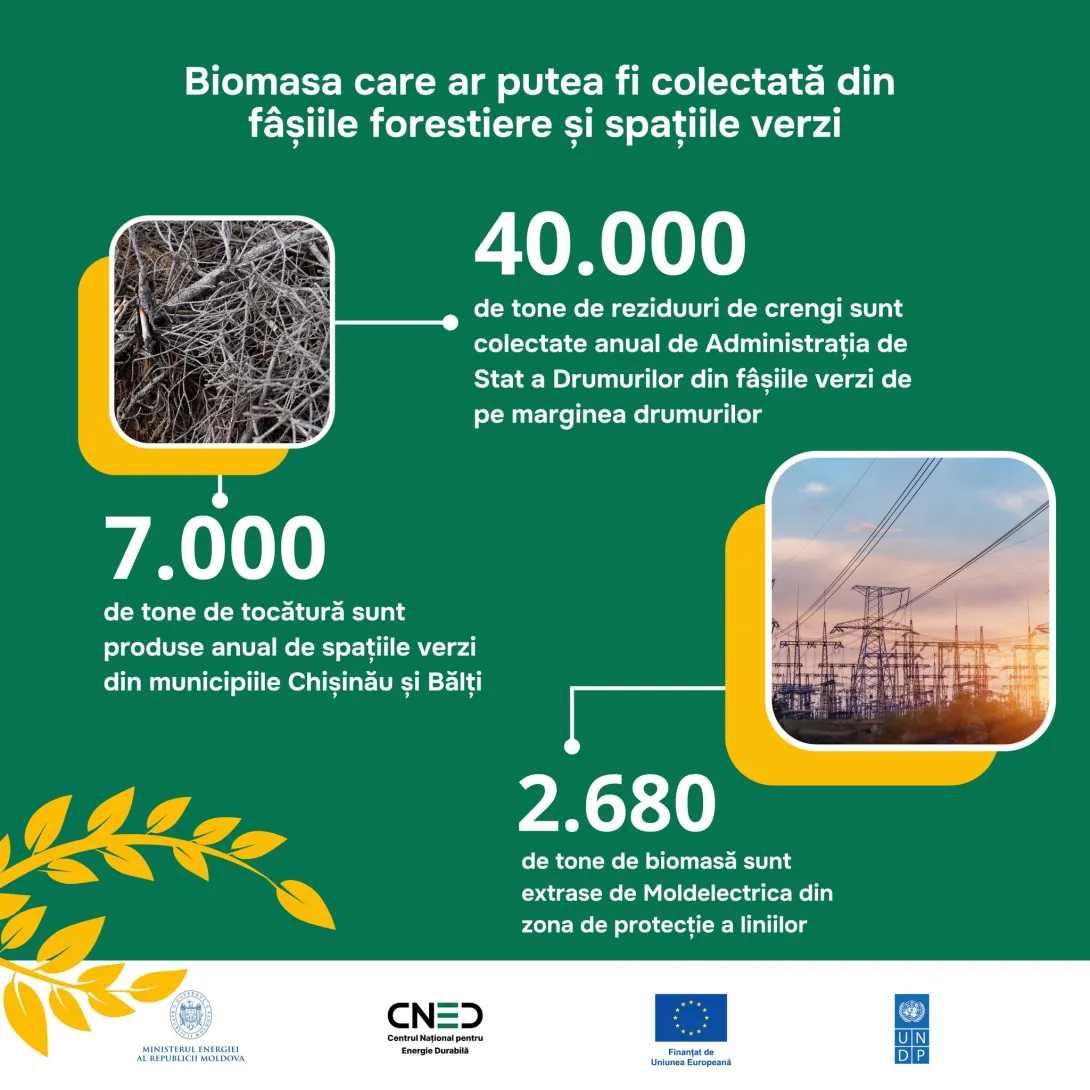
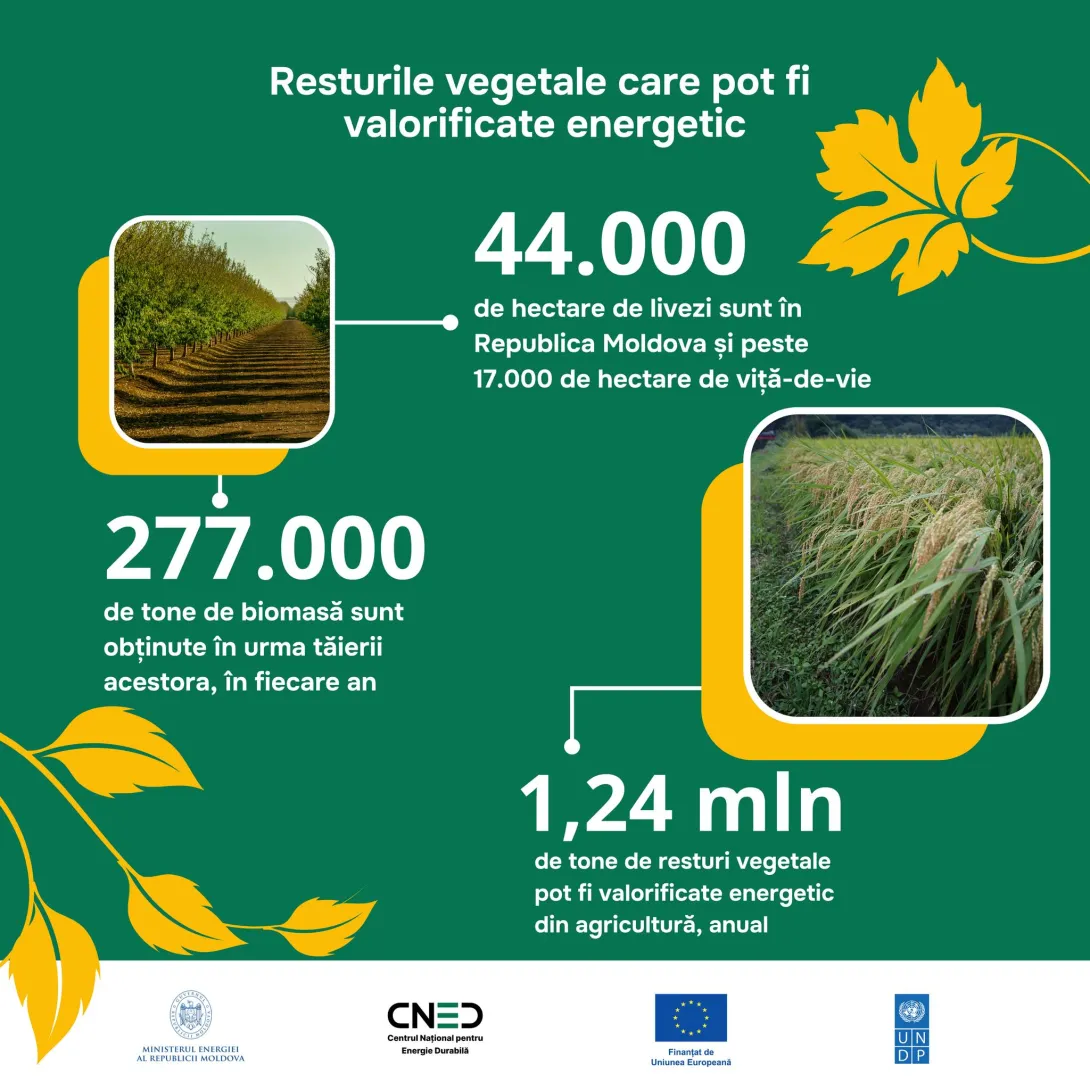
The study authors also suggest mechanisms to encourage farmers to utilize agricultural biomass, particularly the plant residues resulting from deforestation and clearing of plantations. It is proposed to use residual waste from forests and parks for biomass production, including for state-owned enterprises, such as the State Road Administration and Moldsilva.
Another important aspect of the study is supporting the production of briquettes and pellets by subsidizing the installation of photovoltaic systems for producers, in order to reduce energy costs. The biomass energy sector made progress during the period 2012-2017 through the "Energy and Biomass" project, which provided thermal energy to 320 public institutions.
During the energy crisis of 2021-2022, the need to reactivate this sector became more evident. Experts emphasize that Moldova has sufficient biomass resources to replace other types of fuels and to ensure energy for a large part of the population. Special attention is also given to the industry and centralized thermal energy producers, which have a great potential for development.
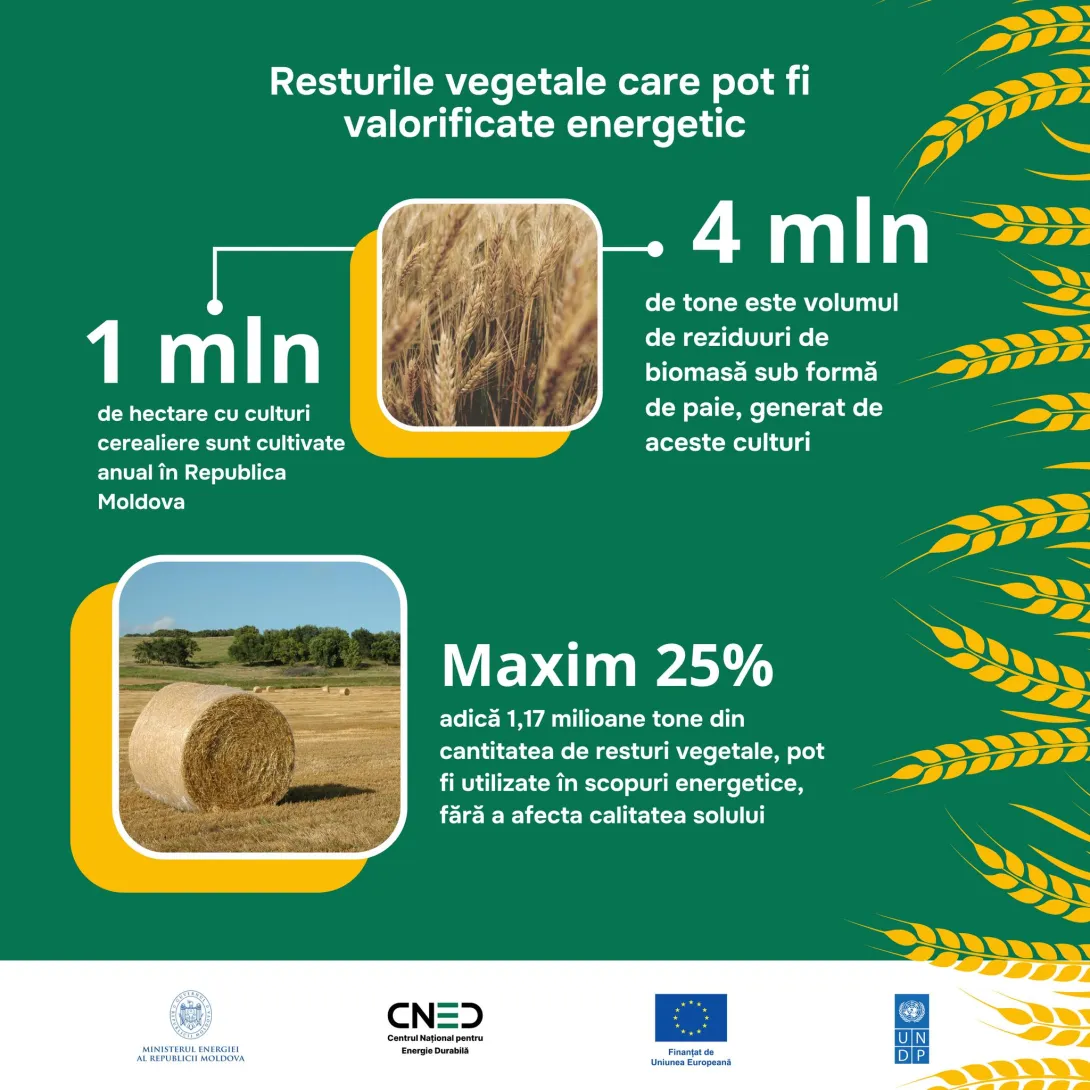
The available agricultural biomass in the country, such as cereal straw and residues from energy plants, can significantly contribute to the production of renewable energy locally, enhancing the country's energy security.
In addition, government authorities support subsidy measures for the installation of biomass boilers in disadvantaged households, within the Energy Efficiency Fund. Currently, the Republic of Moldova produces an average of 25.5 thousand tons of solid biofuels annually, and the public sector and households have biomass thermal power plants, but their utilization is not always optimal.
 2
2-
2